
Who We Help · Bakeries · Payroll
Bakery payroll: two shifts, two risk profiles, one pay run
A bakery runs payroll for two different jobs under one roof — bakers who start while the city is asleep, and counter staff who arrive for the daytime rush — and each carries its own scheduling, overtime, and safety questions. Get the shift structure right, register properly for WSIB, and know which apprentices come with a tax credit attached, and payroll stops fighting the production schedule.
By the AnalytIQ Accounting team · Last reviewed: August 12, 2026
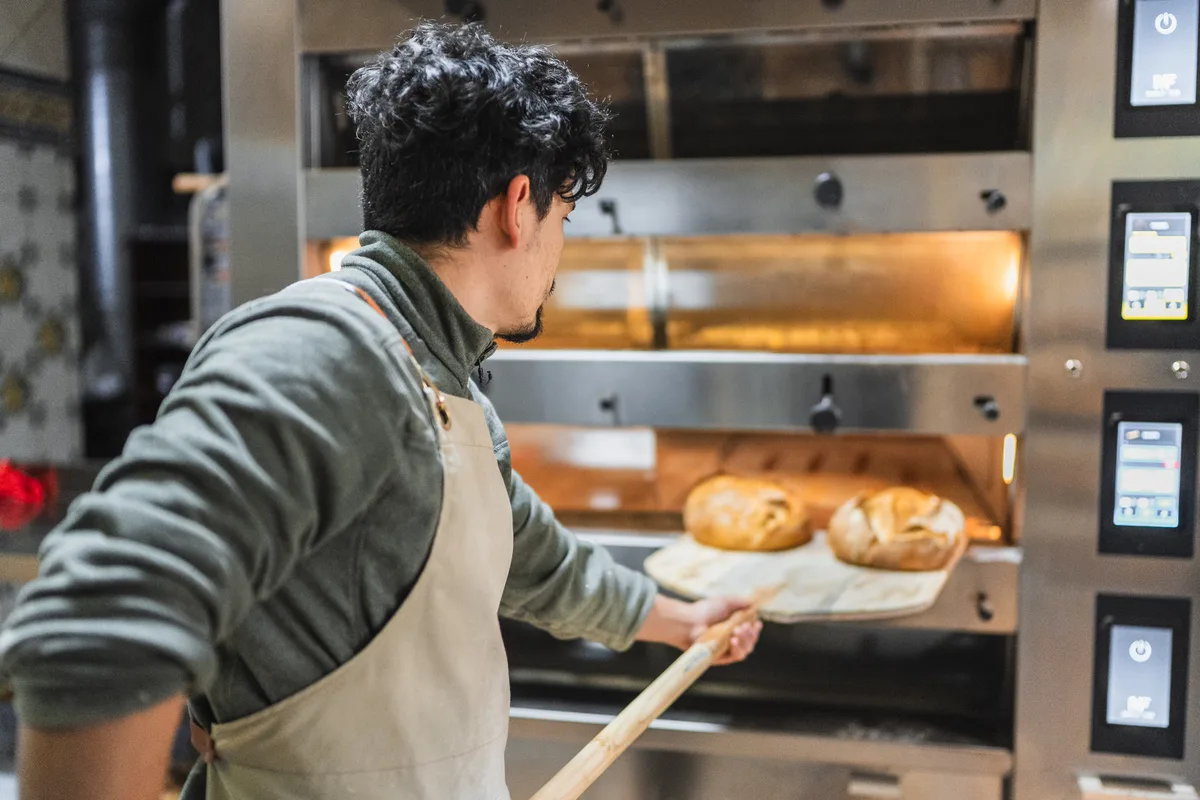
Two crews, two schedules, one Employment Standards Act
The production shift starts hours before opening — often 3 or 4 a.m. — so it is scheduled, timed, and paid on a different rhythm than the counter shift that begins when the doors open. Both answer to the same Ontario rules, but the rules bite differently on each. A baker held past a scheduled finish to close out a batch racks up overtime after 44 hours in the week like anyone else; a counter person cut short on a slow morning is still owed the three-hour minimum if they showed up as scheduled. Running both crews through one time-tracking system, rather than a paper sheet for production and a POS clock-in for the counter, is what keeps hours — not habit — driving the pay run.
Split shifts are common where a baker also covers an afternoon prep block, and Ontario does not require a shift premium for the gap between them — but the ESA still expects each segment recorded accurately, because vacation pay, overtime, and public-holiday averaging all run off actual hours worked.
Public-holiday pay is often the most feared calculation for a part-time counter roster, and it is actually self-correcting: regular wages from the four work weeks before the holiday week, divided by twenty. A weekend-only counter hire prorates automatically, and so does a baker coming off a shortened week — no side spreadsheet required once the formula is wired into the pay run.
| Crew | Typical hours | Main payroll risk |
|---|---|---|
| Bakers and production | 3–4 a.m. start, finishes mid-morning | Overtime after 44 hrs/week; WSIB claims from ovens and mixers |
| Counter and retail staff | Store-hours shifts, often part-time | Three-hour rule on cut shifts; student-wage eligibility checks |
| Wholesale delivery staff | Early-morning routes | Employee-versus-contractor classification if routes are outsourced |
| Seasonal and holiday hires | Short, defined peak periods | Record of Employment within five days of the peak ending |
The mixer, the oven, and the slicer are WSIB’s file, not an afterthought
Commercial baking carries real injury exposure — burns from ovens and proofers, entanglement risk around mixers and dough sheeters, repetitive strain from kneading and lifting flour sacks — and Ontario’s Workplace Safety and Insurance Board treats it accordingly. Bakeries fall under mandatory WSIB coverage, and the correct classification unit matters: it sets your premium rate and shapes what an injury claim actually costs the business. We confirm classification at setup and flag it again if the business adds a commissary kitchen or a wholesale production line, since a broader scope can shift the rate class.
Apprentice bakers can come with a tax credit attached
Baker is a Red Seal trade, and an apprentice working toward certification is both a wage line and, potentially, a credit. As at the time of writing, employers hiring an eligible apprentice in the first two years of a Red Seal program can generally claim the federal Apprenticeship Job Creation Tax Credit — a non-refundable credit worth 10 percent of the apprentice’s wages, capped per apprentice per year — against the T2. The credit is easy to miss because it lives on the corporate return rather than the payroll run, so we flag apprentice hires specifically before the T2 is filed to confirm current eligibility.
Staffing the holiday curve without the fall scramble
Bakery volume spikes hard around Christmas, Easter, and Valentine’s Day, and most shops answer with temporary help rather than a permanently larger crew. Short-term hires still need a proper hire file — a TD1, a clear end-date understanding, and vacation pay built in at 4 percent on every cheque rather than promised later — and every one of them needs a Record of Employment within five days of their last day, whether the shop calls it a layoff or simply "the rush ended." A five-person seasonal wave that skips ROEs quietly becomes five calls to fix in January.
Underneath both crews sits the same fixed spine: a payroll account on your business number, remittances by the 15th of the following month, T4s by the end of February, and the Employer Health Tax exemption on the first $1 million of Ontario payroll that keeps most single-location bakeries out of EHT. That data feeds straight into the labour line in bakery bookkeeping, and if it is ingredient or equipment imports rather than staffing driving your questions, our bakery cross-border tax guide covers that side.
Common questions.
Do our bakers need overtime pay for early starts?
Early start times themselves are not extra pay, but hours still count toward the weekly 44-hour overtime threshold like any other role — a baker who starts at 4 a.m. and stays to finish a large order can cross into overtime the same as staff on any other shift.
Is our bakery required to carry WSIB coverage?
Yes. Food manufacturing and retail baking are classes Ontario treats as mandatory WSIB industries, given the burn, entanglement, and repetitive-strain exposure around ovens, mixers, and slicers — confirm your specific classification unit, since it sets your premium rate.
Can we claim a credit for hiring an apprentice baker?
Likely yes, within limits. Baker is a Red Seal trade, and the federal Apprenticeship Job Creation Tax Credit generally allows a non-refundable credit on a portion of an eligible apprentice’s wages in their first two years — claimed on the T2, so flag apprentice hires before year-end.
Related reading
Payroll built around two shifts.
Book a consultation and get a plain answer on exactly what applies to you.