
Who We Help · Dental Hygienists · Payroll
Dental hygienist payroll: employee in the operatory, employer on the road
Payroll touches dental hygienists from both sides. Working in a dentist's operatory, you are almost always an employee — a day-rate contractor agreement doesn't change whose practice it is. Running a mobile practice under CDHO self-initiation, the roles reverse the day you hire an assistant: the payroll account, the withholding, and the T4 are suddenly yours.
By the AnalytIQ Accounting team · Last reviewed: August 12, 2026
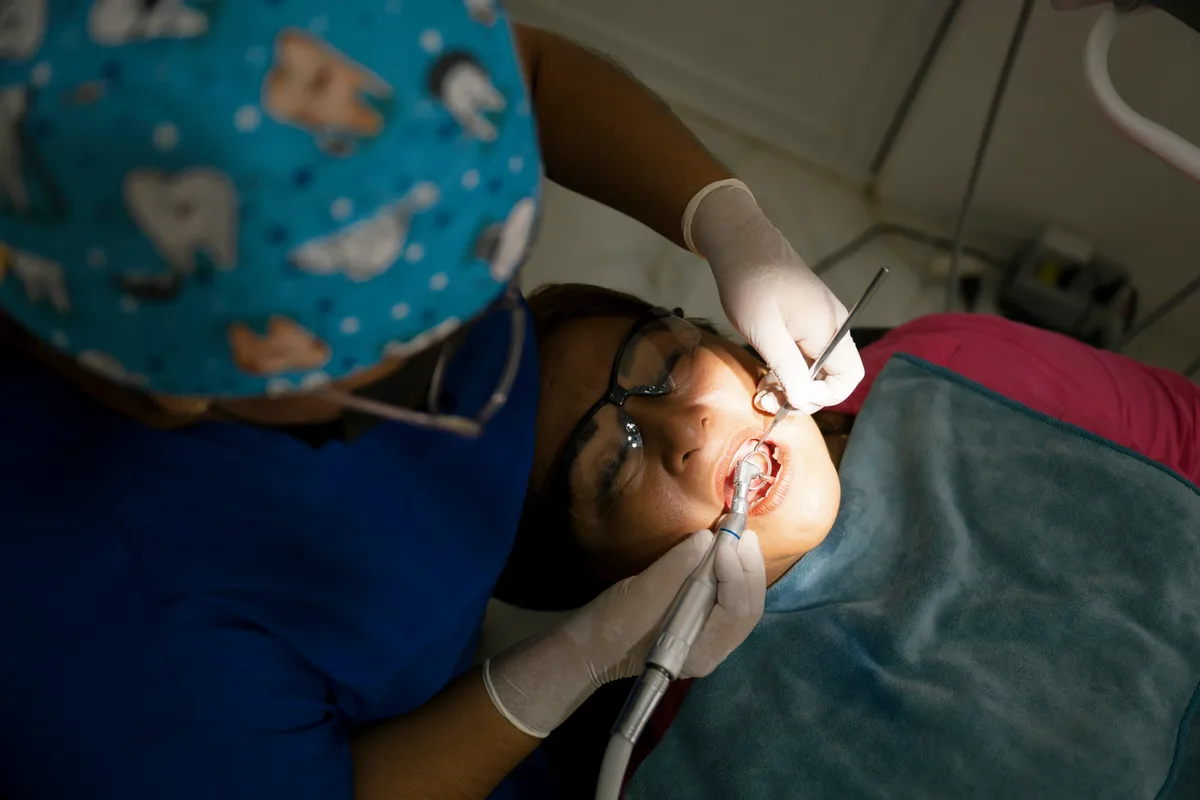
In the clinic: the label rarely survives the operatory
A hygienist working in a dental office treats the dentist's patients, in the dentist's operatory, with the dentist's instruments and sterilization cycle, on a schedule the front desk controls. Those facts describe employment, and a day rate with independent contractor across the top does not outweigh them. Self-initiation authority from the CDHO changes what you may do without a dentist's order — it does not change whose business the clinic is. The costs of the wrong label land on both sides: the clinic wears retroactive CPP and EI for both shares, and the hygienist loses EI coverage she thought she had while her expense claims — travel to the clinic, scrubs, instruments she never actually bought — get denied.
Genuine self-employment inside a clinic exists, but it is rare and looks different: the hygienist rents the operatory, brings her own patient base and equipment, sets her own fees, and bills in her own name — closer to a room-renter model than to a day rate. We wrote the clinic's side of this same question in our dentist payroll guide; the analysis meets in the middle. Temping adds one twist: when a placement agency books your days and pays you, the placement provisions of the EI and CPP regulations put the withholding obligation on the agency — so if temp pay arrives gross with no explanation, raise the flag before a ruling does.
Going mobile: every hire has a trigger
Mobile practice is where hygienists become employers, usually one small step at a time. Each step has a payroll consequence that is cheaper to set up on time than to backfill.
| Stage | What changes | What to set up |
|---|---|---|
| Solo mobile practice | All income is yours; no payroll exists | T2125 self-employment reporting — or a professional corporation |
| First assistant for LTC and home-visit days | You are an employer from the first hour, even at two days a week | RP account before the first payday; T4 withholding from dollar one |
| A second hygienist joins | The employee-or-contractor call is now yours to make | Wage with a T4, or a genuine associate arrangement with a T4A box 048 |
| Booking and admin help | On your schedule, they are an employee; a freelance VA invoicing many clients is not | Payroll for the first; invoices on file for the second |
Micro-employer mechanics, without the drag
A mobile practice's payroll is small enough to run cleanly if the defaults are set right at the start. Software such as Wagepoint or QuickBooks Online Payroll handles the withholding; remittances are due the 15th of the month after payday, and most hygiene practices qualify quickly as quarterly small remitters because average monthly withholdings sit under $3,000. T4s go out by the last day of February. The obligation owners underestimate is the ROE: casual assistants generate interruptions of earnings every time an LTC contract pauses, and each one needs a slip within days. Part-time staff still earn stat-holiday pay on Ontario's four-weeks-divided-by-twenty formula, vacation pay accrues from the first cheque, and WSIB classification for mobile dental hygiene is worth a confirmation call rather than an assumption. Travel between LTC sites raises a pay question of its own: a reasonable per-kilometre allowance to your assistant is non-taxable, while a flat monthly car allowance is just taxable wages. The Employer Health Tax, at least, is a non-issue — the $1 million exemption sits far above a mobile practice's payroll.
The exempt-services kicker, and what's across the border
Dental hygiene services are HST-exempt, which sounds like good news until you price a contract: exempt suppliers claim no input tax credits, so the HST on your portable equipment, supplies, and software — and every dollar of assistant payroll — is a full, unrecoverable cost. LTC and retirement-home bids need to be built on loaded labour cost, not the hourly wage. If the practice grows, a professional corporation through a CDHO certificate of authorization opens the salary-versus-dividend choice for your own pay — salary building RRSP room, dividends skipping CPP — and we model it annually rather than by habit. The cross-border file for hygienists is genuinely thin — US CE courses and credential questions more than income — and we keep it that way in our cross-border guide for dental hygienists rather than inventing complexity.
Source: CRA — Payroll.
Common questions.
The clinic pays me a day rate and calls me a contractor — am I one?
Probably not. Treating the dentist's patients on the clinic's schedule with the clinic's instruments is employment under CRA's tests, whatever the agreement says. Real self-employment in a clinic looks like operatory rental with your own patients and fees.
I hired an assistant two days a week — do I really need a payroll account?
Yes. Employer obligations start with the first hour of employment: an RP account before the first payday, CPP, EI, and tax withheld from dollar one, remittances, a T4 in February, and an ROE whenever earnings are interrupted.
Why does HST matter to my payroll costs if my services are exempt?
Because exempt means no input tax credits: the HST on equipment and supplies is unrecoverable, and assistant wages carry payroll costs with no offset. Contracts should be priced on fully loaded labour cost.
Related reading
From first assistant to full team.
Book a consultation and get a plain answer on exactly what applies to you.