
Who We Help · Truckers · Cross-Border Tax
Cross-border trucking tax: IFTA, the treaty, and why you still file in the US
Most Canadian carriers owe no US federal income tax on cross-border freight — Article VIII(4) of the Canada-US treaty exempts transportation between a point outside the US and any other point, even where the carrier has a US permanent establishment. But owing nothing and filing nothing are different things: IFTA and IRP reallocate fuel tax and plate fees every quarter, the IRS expects a treaty disclosure, and revenue from purely US-domestic moves sits outside the exemption entirely. We run this file every week from Brampton, Canada’s trucking capital.
By the AnalytIQ Accounting team · Last reviewed: August 12, 2026
One truck, three tax systems
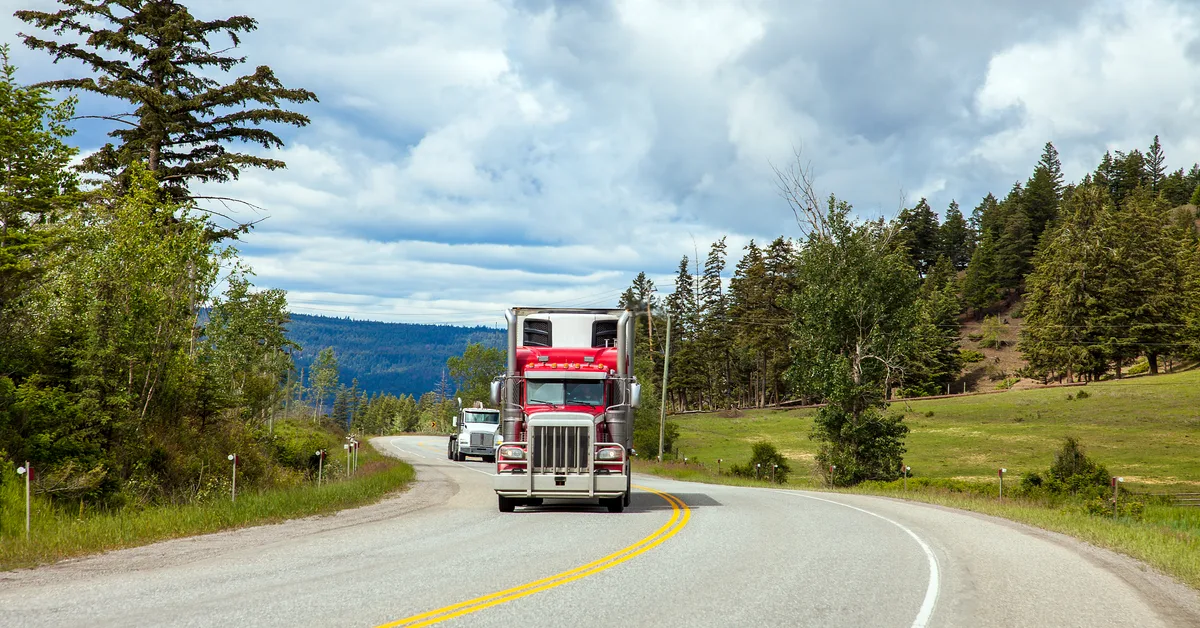
A tractor leaving Brampton for Ohio touches three tax systems before it gets home: fuel and registration taxes apportioned through IFTA and IRP, US federal income tax that the treaty almost always eliminates, and the Canadian rules that tax the profit and the driver's meals. Getting each layer onto the right form, in the right country, is most of the work.
This is the file we build most often in our cross-border tax practice: owner-operators running as one-truck corporations, and small fleets on dedicated US lanes. The Canadian side is conventional — a T2 on worldwide income, with USD settlements converted to Canadian dollars. The revenue itself is usually zero-rated for GST/HST, because international freight transportation services carry a zero rate while your Canadian fuel, repairs and insurance still generate input tax credits.
IFTA and IRP: the layer that never stops
IFTA does not tax income — it reallocates fuel tax to where you actually drove. Ontario is your base jurisdiction: one quarterly return covers every member state and province, reporting distance and fuel purchased by jurisdiction, and the system nets what each jurisdiction is owed against what you already paid at the pump. Returns are due April 30, July 31, October 31 and January 31, and clean ELD distance records are what make them painless instead of an estimate the auditor can pull apart.
IRP does the same job for plates: one apportioned registration, with fees split by each jurisdiction's share of your fleet distance. Neither program covers everything, which is where surprises live.
| US filing | What it does | Cadence |
|---|---|---|
| IFTA return | Reallocates fuel tax by distance driven in each member jurisdiction | Quarterly, through Ontario |
| IRP renewal | Apportions plate fees by fleet distance shares | Annual |
| Form 2290 (HVUT) | US heavy vehicle use tax on trucks with a taxable gross weight of 55,000 lbs or more using US highways | Annual |
| Weight-distance returns | New York, Kentucky, New Mexico and Oregon tax miles separately — IFTA does not cover them | Per state, mostly quarterly |
| 1120-F with Form 8833 | Claims the treaty exemption on US-source freight revenue and protects your deductions | Annual |
Article VIII(4): why your US revenue escapes US tax — usually
The treaty has a provision written for this industry. Under Article VIII(4), profits a Canadian carrier earns from transporting property between a point outside the US and any other point are exempt from US federal income tax — even where the carrier has a US permanent establishment. Every classic cross-border move, Brampton to Chicago or Laredo back to Mississauga, sits inside that sentence.
What sits outside it is revenue from moves that begin and end inside the US. Repositioning legs and drayage turns around US ports and rail ramps are purely domestic transportation, and they fall back into the ordinary business-profits and permanent-establishment rules — which is exactly where a US terminal, yard or dispatch presence starts to matter. US states add their own wrinkle: they are not bound by the treaty at all, so state income and franchise tax exposure runs on each state's own nexus rules.
The protective 1120-F: cheap insurance for the whole file
Treaty exemptions are claimed, not assumed. For carriers with meaningful US revenue we file Form 1120-F with a Form 8833 treaty-based disclosure — often as a protective return showing no tax due. Filing on time preserves the right to deduct expenses if the IRS ever decides some revenue was effectively connected with a US business; a carrier that never filed can be taxed on gross revenue, with fuel, wages and truck payments disallowed.
The same discipline cleans up the paperwork noise. When US brokers and shippers ask for a W-8BEN-E, they get one that matches the treaty position on file, instead of an improvised form that contradicts it.
Driver meals: TL2 discipline beats US per-diem envy
Canadian drivers claim meals on Form TL2, and the simplified method is built for the road: $23 per meal, up to three meals a day, claimed in US dollars for travel days in the US — no receipts required, but a trip log that proves where you were. Long-haul drivers, away at least 24 hours on trips at least 160 kilometres from the home terminal, deduct 80 percent of meal costs instead of the usual 50.
US carriers run per-diem plans under IRS rules, and drivers hear about them at every truck stop. The Canadian mirror is narrower: a meal allowance your company pays reduces what the driver can claim, because the same meal is never deducted twice. For incorporated owner-operators we run the meal claim inside the corporation at the same 80 percent long-haul rate, matched to the logbook — and the rest of the structure, from the T2 to paying yourself, lives with our trucker tax services.
Source: CRA — Form TL2, Claim for Meals and Lodging Expenses.
Common questions.
Do we owe US income tax on loads from Ontario into the US?
Almost never at the federal level: Article VIII(4) of the Canada-US treaty exempts carrier profits from transportation where one end of the move is outside the US, even with a US permanent establishment. The exemption is claimed on a Form 8833 disclosure, not assumed by silence.
We have hauled US freight for years and never filed a 1120-F. Is that a problem?
It is a fixable one. A protective 1120-F preserves your right to deductions if the IRS ever treats revenue as effectively connected; without it, tax could be assessed on gross revenue. We bring the filing history current and keep it current.
How do drivers claim meals on US trips?
Form TL2 with the simplified method: $23 per meal in US dollars for US travel days, up to three meals a day, at 80 percent for long-haul trips — supported by a trip log rather than receipts. Employer-paid meal allowances reduce the claim.
Related reading
Every mile accounted for, both sides of the line.
Book a consultation and get a plain answer on exactly what applies to you.