
Who We Help · Tow Truck Operators · Cross-Border Tax
Tow truck cross-border tax: thin, but real when it hits
Most towing companies never generate a dollar of US income, and this page says that plainly rather than pad the file with treaty content that does not apply. Where the border actually shows up is a US-plated vehicle you are asked to recover or store, and the truck itself — a wrecker or rotator bought at a US auction arrives with exchange, duty, and border GST attached before it is worth a dollar on your lot.
By the AnalytIQ Accounting team · Last reviewed: August 12, 2026
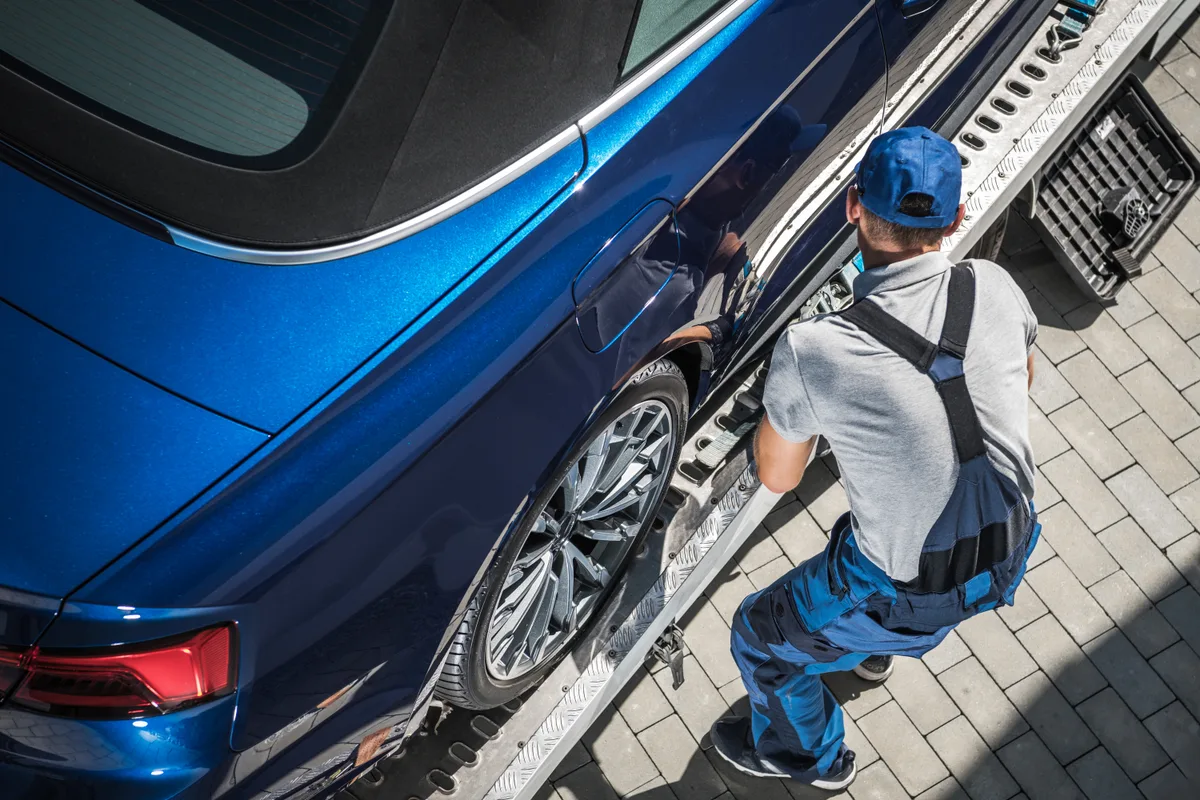
Recovering or storing a US-plated vehicle is not a tax event
A vehicle registered in Michigan or New York that ends up on your flatbed after an accident near the border, or in your yard under a lien, does not change your tax filing at all — you are still a Canadian company billing a Canadian tow and, if it comes to that, a Canadian storage fee, in Canadian dollars, taxed the same as any other call. The real complication is procedural rather than tax: notifying an out-of-country registered owner or lienholder under the Repair and Storage Liens Act takes longer and costs more in tracing than a standard in-province notice, and it is worth budgeting that time before assuming a lien sale will close on the usual schedule. None of it touches HST or income tax treatment, and there is no US filing obligation created by having briefly held a US-plated vehicle in an Ontario yard. The one item worth double-checking is insurance: confirm with your carrier that recoveries and storage involving out-of-country plates are covered under your existing policy, since this is a coverage question rather than a tax one, but it is the piece most often overlooked in the moment.
Buying a truck at a US auction: the bid is not the landed cost
Used wreckers and rotators move through US auction sites the same way other commercial trucks do, and the hammer price is only the starting point. The purchase converts to Canadian dollars at the actual payment-date exchange rate, then buyer's premium, transport, brokerage, and any duty stack on top to form the truck's real capital cost — the number CCA is actually calculated from. Skip any of those add-ons at the time of purchase and the CCA claim, and eventually the recapture calculation on sale, is simply wrong.
| Cost line | Treatment |
|---|---|
| Hammer price plus buyer's premium | Converted at the payment-date rate — the base capital cost |
| Duty | Nil with a valid CUSMA certificate of origin for a North American-built truck; otherwise the standard tariff rate for goods-transport vehicles |
| Border GST | 5 percent of the Canadian-dollar value — an input tax credit when your business is importer of record |
| Transport, brokerage, RIV inspection | Capitalized into the truck's cost, not expensed |
Duty follows where the truck was built
A wrecker or carrier assembled in the US, Canada, or Mexico generally enters duty-free with a valid CUSMA certificate of origin in hand at import; without that paperwork, the ordinary tariff rate for goods-transport vehicles applies, and a US auction invoice alone does not prove origin to a border officer. On-road units also clear the RIV inspection process before Ontario will plate them, so it is worth confirming a specific truck's admissibility with a broker before bidding rather than after paying. GST at 5 percent applies to the converted value at the border, and it comes back in full as an input tax credit once your company is named as importer of record on the customs entry — not a broker's account or a transporter's, which is the most common way this credit gets stranded and never claimed.
If a cross-border haul ever lands on your desk
Occasionally an operator near Windsor, Niagara, or Sarnia gets asked to run a recovery across the bridge — a genuine cross-border tow rather than a local call involving a foreign plate. The practical hurdles usually show up before the tax questions do: a driver and truck crossing into the US need the right customs paperwork for a commercial vehicle entry, and the truck itself may need US operating authority depending on how far into the US the recovery actually runs. That single trip does not make you an inter-jurisdictional carrier on its own, but a habitual cross-border lane would, bringing IFTA, IRP, and US treaty filings into a business that has never needed them. If US work turns from a one-off request into a standing arrangement, that is a conversation to have with us before committing a truck to the lane, not after — the compliance setup takes real lead time, and improvising it mid-contract is how a company ends up filing catch-up returns instead of routine ones. A single trip billed and paid in Canadian dollars to a Canadian customer rarely justifies that setup on its own; it is the recurring lane, with US-source billing attached to it, that changes the calculus. The setup work for a business that crosses the border regularly runs through our cross-border tax practice, and the fleet's ordinary numbers stay with our towing bookkeeping service.
Source: CBSA — Memorandum D19-12-1, Importing Vehicles into Canada.
Common questions.
Does towing a US-plated vehicle create any US tax filing?
No. The tow and any storage are still Canadian services billed in Canadian dollars, taxed the same as any other call. The only real difference is that notifying an out-of-country owner under lien rules takes longer.
Do we pay duty on a used wrecker bought at a US auction?
Not if it was built in the US, Canada, or Mexico and you have a valid CUSMA certificate of origin at import — the auction invoice by itself does not prove that. Other origins pay the standard tariff rate for goods-transport vehicles.
We got asked to do one tow across the border. Does that change anything?
A single trip generally does not make you an inter-jurisdictional carrier, but a recurring cross-border lane would, bringing in IFTA, IRP, and US filings. Worth a call before it becomes a standing arrangement rather than after.
Related reading
The border costs priced in, not discovered.
Book a consultation and get a plain answer on exactly what applies to you.