
Who We Help · Freight Brokers & 3PLs · Tax Services
Freight broker tax services: zero-rated freight, taxable legs, and the T2 on thin margins
GST/HST on freight turns on geography, not on who arranges the move: freight transportation forming part of a continuous international movement is zero-rated, while a purely domestic leg is taxable, and getting that line wrong on a brokerage invoice either overcharges a shipper or quietly shorts CRA. We run that classification correctly on every invoice, then file a T2 that reflects what a brokerage actually keeps — its margin — not the gross freight bill passing through its accounts.
By the AnalytIQ Accounting team · Last reviewed: August 12, 2026
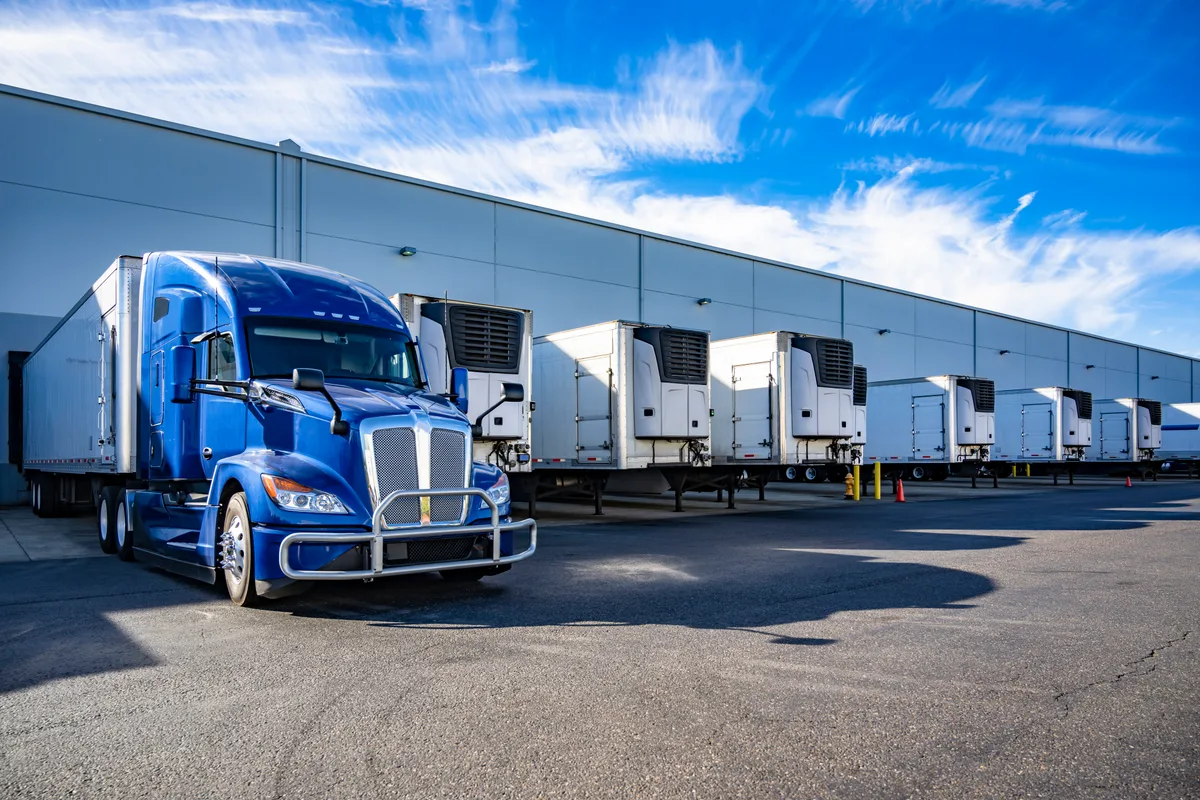
Zero-rated international freight versus taxable domestic legs
Under the Excise Tax Act, a freight transportation service is generally zero-rated when it is part of a continuous freight movement that begins or ends outside Canada — a load from Brampton to Ohio, or Chicago back to Mississauga, keeps that zero-rating even where the invoicing is split across several legs or several carriers. A load that starts and ends entirely within Canada, with no connection to an international movement, is a standard taxable supply at the applicable HST rate. Getting this right on every invoice matters more for a brokerage than for almost any other business type, because freight is effectively the entire revenue line — a systematic misclassification compounds fast across hundreds of loads a year.
Interlining: the continuous movement test carries through multiple carriers
When a shipment moves through more than one carrier — interlined between a long-haul carrier and a local cartage company, for example — the zero-rating on the international portion generally follows the shipment through each leg, provided the documentation shows it as one continuous movement rather than separate, unrelated hauls. This is where paper trail discipline earns its keep: a bill of lading or rate confirmation that clearly ties a domestic pickup or delivery leg to the larger international movement is what supports zero-rating that leg; without it, CRA has grounds to treat a domestic-looking transaction as exactly that.
| Movement | GST/HST treatment |
|---|---|
| Brampton to a US destination, one carrier | Zero-rated |
| US border crossing plus a local Canadian cartage leg to final delivery, documented as one movement | Zero-rated, including the domestic leg |
| Toronto to Ottawa, no international connection | Taxable at the applicable HST rate |
Zero-rated does not mean no input tax credits
A brokerage billing mostly zero-rated international freight sometimes assumes it has little GST/HST left to recover, confusing zero-rated with exempt — the two are not the same. Zero-rated supplies are still taxable supplies, just at 0%, which means input tax credits on office costs, software, insurance, and any HST-bearing overhead remain fully claimable even though the brokerage charges no tax on most of its own invoices. We check this specifically, because it is a common source of unclaimed credits in a business that spends most of its energy thinking about carrier cost rather than its own overhead.
Carrier invoices should carry the same domestic-versus-international split as the brokerage's own billing to the shipper, since a carrier hauling the international leg is generally zero-rating that portion too. Reconciling carrier bills against the movement type keeps the whole chain — carrier to broker to shipper — consistent, which matters if CRA ever traces a shipment back through the paperwork.
The T2 runs on margin, and instalments should too
A brokerage's taxable income tracks its net margin, not the gross freight billed through the business, and Ontario's combined small business rate applies to active income up to the $500,000 threshold the same as any other CCPC. Because margin percentage can move with fuel costs, carrier capacity, and customer mix from quarter to quarter, we set instalments based on a current-year estimate rather than letting CRA's prior-year default run unexamined — a brokerage growing volume quickly can find its instalment base badly out of date within a single year, either overpaying and starving working capital or underpaying and facing arrears interest at year-end.
US-source business income is a separate question, and usually a good one
Brokerages doing meaningful, growing US business sometimes ask whether they need to file anything at all south of the border. In most cases the honest answer is that no federal US income tax is owed at all, because brokerage commission income is ordinary business profits under Article VII of the Canada-US tax treaty, and those profits are taxable in the US only if they are attributable to an actual US permanent establishment — a materially different position than a carrier's own transportation profits, which sit under a separate treaty article covering international traffic entirely. We cover that distinction, and what does create a US filing obligation, on our cross-border tax page for freight brokers and 3PLs. The rest of the corporate filing, T2 and GST/HST together, runs through our tax services practice on the same fixed-fee basis as everything else we do.
Common questions.
Is freight from Ontario to a US destination taxable for GST/HST?
No, it is generally zero-rated as part of a continuous international freight movement. A load that starts and ends entirely within Canada with no international connection is taxable at the applicable rate.
Does interlining with another carrier change the GST/HST treatment?
Not usually, as long as the documentation shows the legs as one continuous international movement. Clear bills of lading and rate confirmations tying the domestic leg to the international one are what support that position.
Do we owe US tax on commissions from booking US-bound loads?
In most cases no federal US tax applies, since brokerage commission income is business profits under Article VII of the treaty and is only taxable in the US if attributable to a US permanent establishment.
Related reading
GST/HST and T2 filing built for how freight actually moves.
Book a consultation and get a plain answer on exactly what applies to you.