
Who We Help · Flooring & Tile Installers · Payroll
Flooring crew payroll: piece-rate pay, sub crews and WSIB clearances
Paying installers by the square foot is normal in flooring and perfectly legal, for employees and subcontractors alike. What is not legal is treating a crew as a subcontractor when you set the schedule, supply the product and carry the risk. We run flooring payroll so piece rates clear minimum wage on recorded hours, sub crews are classified defensibly, and WSIB clearances are in place before a builder releases a cheque.
By the AnalytIQ Accounting team · Last reviewed: August 12, 2026
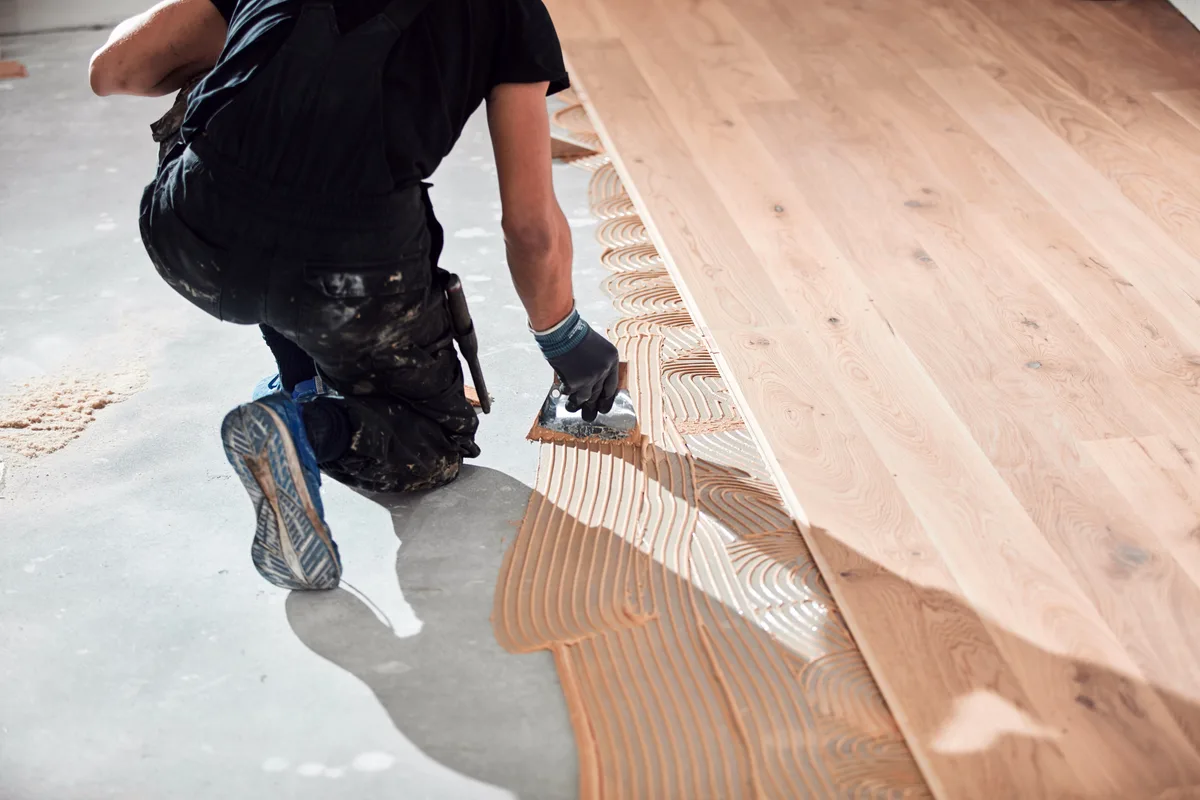
Piece rates are fine; missing hour records are not
Ontario's Employment Standards Act lets you pay an employee per square foot, per stair or per room, but the earnings for each pay period still have to equal at least minimum wage for the hours actually worked, and you have to keep a record of those hours. A crew that flies through a large click-LVP main floor earns well above the floor; the same crew on a herringbone tile day may not. Without time records you cannot prove either outcome to an employment standards officer.
We set piece-rate employees up in Wagepoint or Payworks with hours captured through a field time app such as ClockShark or busybusy, and the pay run applies a top-up automatically when square-foot earnings fall short in a period. CPP, EI, income tax and vacation pay are calculated on piece-rate earnings like any other wage. Contrast that with a per-square-foot invoice from a so-called sub, where none of it happens, which is exactly why CRA looks at these arrangements closely.
Sub crew or employee: the test in flooring terms
CRA and the courts look at who controls the work, who owns the tools, who carries the chance of profit and risk of loss, and how integrated the worker is into your business. In a flooring company those factors show up in ordinary operating decisions:
| Factor | Points toward employee | Points toward subcontractor |
|---|---|---|
| Control | You schedule the crew daily, assign the jobs and set start times | The crew accepts or declines jobs and sets its own sequence |
| Tools and equipment | Company van, wet saw, nailers and levelling gear | Crew owns its saws, compressors and vehicle |
| Profit and risk | Paid the same whether the job runs long or short; you absorb redo costs | Crew fixes its own deficiencies unpaid and can lose money on a bad measure |
| Integration | Works only for you, wears your shirt, has no HST number | Serves several retailers, invoices with an HST number, carries its own insurance and WSIB |
A crew that works exclusively for you, in your van, on your schedule, is an employee no matter what the invoice says. Getting it wrong means back CPP and EI with penalties, WSIB premiums assessed retroactively, and vacation pay claims. Our answer page on how CRA decides employee or contractor covers the test in detail; our advice for flooring companies is to make the choice on purpose and paper it either way.
WSIB: mandatory in construction, and the clearance is your invoice's passport
Since 2013, WSIB coverage has been mandatory for most of the Ontario construction industry, including independent operators, sole proprietors, partners and executive officers of construction corporations. Flooring and tile installation is construction for this purpose. The main exception is home renovation work done directly for the homeowner who lives there; the moment you work for a builder, a general contractor or a retailer, that exemption is gone.
Two practical consequences follow. First, a builder will not release payment without a valid WSIB clearance certificate, and clearances are only issued when your account is registered and in good standing, so a late premium remittance stops your cash. Second, if a sub crew has no WSIB account of its own, the labour portion of what you pay it is generally added to your insurable earnings and you pay the premium on it. We reconcile the premium base each period against payroll plus uncovered sub-crew labour, so the annual reconciliation holds no surprises. The answer page on whether an Ontario business needs WSIB covers the registration mechanics.
The construction-employee rules that change your pay runs
Ontario treats construction employees differently under the ESA in a few ways that matter to a flooring crew. Vacation pay is commonly paid out on every cheque rather than banked, which is permitted with the employee's agreement and is what most crews expect. Construction employees who receive 7.7 percent or more of their wages as vacation or holiday pay are exempt from the public holiday provisions, so the statutory-holiday calculation you run for office staff does not apply to the crew in the same way, as at the time of writing; we check the regulation each year. Construction employees are also exempt from termination notice and pay, which is why a layoff at the end of a builder contract is handled differently than one in an office.
Showroom and office staff, by contrast, are ordinary ESA employees with public holiday pay, termination notice and banked vacation. A flooring company usually has both kinds on one payroll, and the software has to be configured to treat them differently.
Remittances, EHT, CPP2 and the year-end slips
Source deductions go to CRA on your remitter schedule; a growing crew payroll can move you from quarterly to monthly to accelerated remitting, and the penalties for late remittances are steep. Ontario Employer Health Tax starts once your Ontario payroll passes the exemption, which for most private employers is the first $1 million of remuneration. The second CPP contribution tier introduced in 2024, known as CPP2, applies to higher-earning installers and has to be switched on in the payroll system.
At year-end, employees get T4s, sub crews get T5018s, and the two lists should never overlap. We prepare both from the same ledger, which is only possible when the classification decisions were made properly all year. How the slips tie into your corporate return is on our flooring tax services page, and the full payroll package is on our payroll services page.
Common questions.
Can I pay my installers by the square foot?
Yes, whether they are employees or subcontractors. For employees, the period earnings must still reach minimum wage for the hours actually worked, so you need hour records alongside the square-foot tally.
My sub crew has no WSIB account. Is that my problem?
Usually, yes. In construction, a principal that hires an uncovered subcontractor generally pays WSIB premiums on the labour portion of that contract, and the builder you work for will expect a clearance either way.
Do statutory holidays apply to my crew?
Construction employees who receive at least 7.7 percent of their wages as vacation or holiday pay are exempt from the ESA public holiday rules as at the time of writing. Showroom and office staff are not exempt, so one payroll needs two settings.
Related reading
Payroll that keeps crews and clearances clean.
Book a consultation and get a plain answer on exactly what applies to you.