
Who We Help · Fence & Deck Builders · Cross-Border Tax
Fence and deck cross-border tax: the lumber duty runs the other way here
Most of what crosses a Canada-US border in this trade is decking, not lumber, and the file for a typical fence and deck company is genuinely thin. But it is not nothing. Composite decking is largely a US-manufactured product bought in USD, and the one scenario builders do not expect — taking Canadian lumber south for a job — runs into the same softwood duties that usually make headlines about exports the other way.
By the AnalytIQ Accounting team · Last reviewed: August 12, 2026
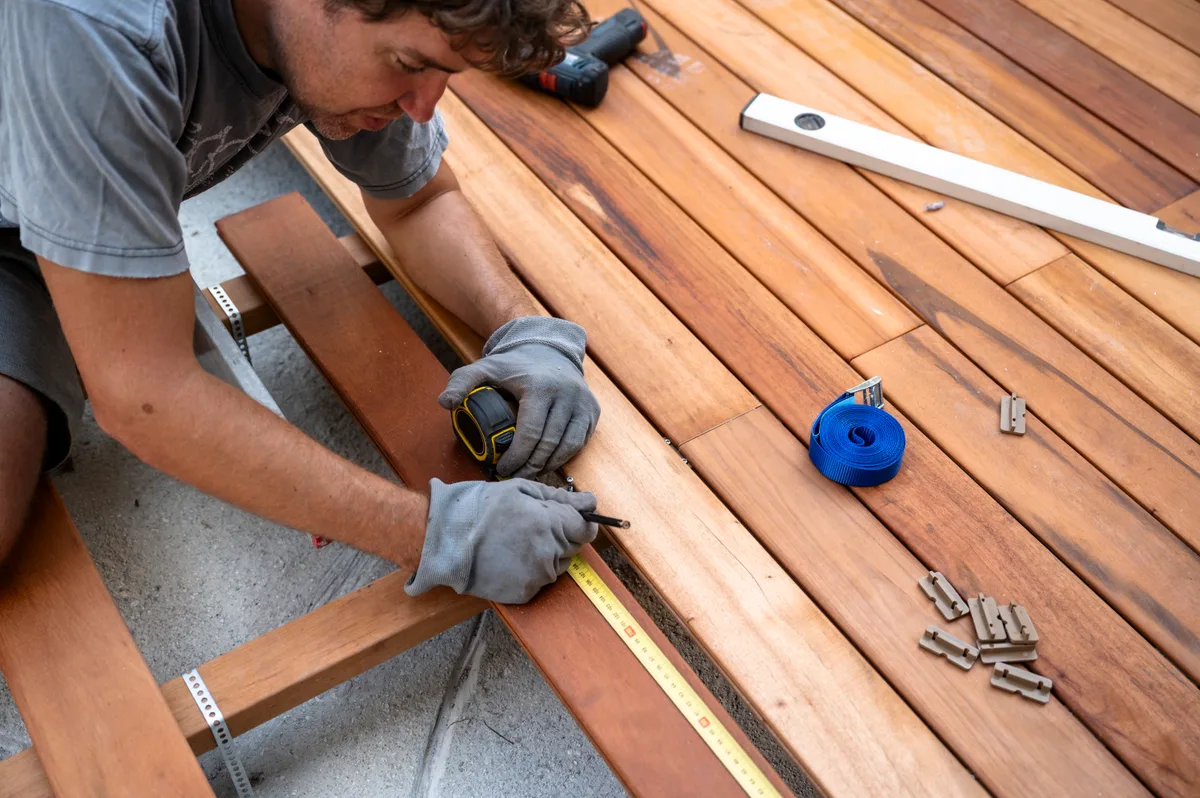
Composite decking: a US product you buy in USD
The major composite decking brands — the wood-plastic and PVC lines that have taken share from pressure-treated lumber on higher-end jobs — are manufactured in the US. Most builders buy through a Canadian distributor who has already cleared the import, so the transaction looks like any domestic purchase invoice. The exposure shows up when a client wants a colour or profile the local distributor does not stock and you order directly from a US supplier: that shipment is a commercial import, GST of 5 percent is payable at the border and recoverable as an input tax credit on your next return, and decking manufactured in the US is generally duty-free on entry to Canada under CUSMA once origin is documented. The number that actually moves is the exchange rate: the invoice converts to Canadian dollars on the day it is dated, the payment settles at whatever the rate is by then, and the spread between the two shows up as a currency gain or loss rather than a change in the price of the decking. How to record USD transactions in Canadian books sets out the mechanics we use.
Railing hardware, fasteners and fittings: smaller, but still an import
Stainless cable railing kits, specialty post caps and some fastener lines used on higher-end decks are also frequently sourced from US manufacturers, and the same mechanics apply at a smaller scale: GST recoverable, duty generally nil under CUSMA for US-origin goods, and a USD bill to book at the invoice-date rate. The only reason this is worth planning for at all is volume — a builder doing a handful of premium decks a year barely notices it; one who has built a reputation for cable railing and orders it by the pallet should have the exchange-rate and duty mechanics set up properly rather than treated as an afterthought each time.
The rare US job: your own lumber becomes an export with duties attached
The scenario builders do not see coming is the one where they are the exporter. A client with a property across the border — a cottage in New York state, a lake house in Michigan — sometimes asks their Ontario fence or deck builder to do the work, using material sourced and often pressure-treated in Canada. Canadian softwood lumber entering the US has been subject to countervailing and anti-dumping duties for years under a long-running trade dispute, with combined rates that the US Department of Commerce revises periodically and that have run in the double digits as at the time of writing. There is no small-job exception written into those orders: a truckload of Canadian lumber crossing as commercial goods for a single deck is, in principle, subject to the same duty as a bulk lumber shipment, classified by the same tariff codes. In practice, most builders sidestep the exposure by buying the lumber from a US supplier once they are across the border rather than hauling Canadian stock south, and we recommend pricing the job on that basis before assuming your usual lumber yard can simply ship the order.
| Scenario | Border treatment | What we watch |
|---|---|---|
| Composite decking bought direct from a US manufacturer | GST recoverable; generally duty-free under CUSMA | Exchange rate at invoice date versus payment date |
| Cable railing kits and specialty fittings from a US supplier | Same as above, at smaller volumes | Worth a proper process only once volume justifies it |
| Canadian lumber trucked south for a US job | Subject to US countervailing and anti-dumping duties on softwood lumber | Usually cheaper to buy the lumber once you are in the US |
| A single US deck or fence job billed to a US client | Treaty protects against US income tax below the 12-month site threshold | Protective 1120-F, Form 8833, W-8BEN-E to the client |
If you take the job: the treaty position and the paperwork it needs
Under the Canada-US tax treaty, a construction site only becomes a US permanent establishment once the work runs longer than twelve months, so a single fence or deck job does not by itself trigger US federal income tax. That treaty position is still something you claim, not something that happens automatically: a protective Form 1120-F with Form 8833 attached preserves it, and a W-8BEN-E given to the client keeps them from withholding 30 percent of what they owe you. State income tax rules do not always follow the federal treaty, and contractor licensing is set at the state or county level, so both are worth a quick check before you quote a cross-border job at all. None of this changes the domestic HST position on the Canadian side of the invoice: services performed on real property located outside Canada are outside the scope of HST, which at least keeps that part simple. The rest of our cross-border toolkit is on our cross-border tax services page, and the domestic tax picture for a fence and deck business is on our tax services for fence and deck builders page.
Source: US International Trade Administration — softwood lumber from Canada.
Common questions.
Do I pay duty on composite decking I order from the US?
Generally no duty when it is manufactured in the US and properly documented under CUSMA, though GST is still payable at the border and recovered as an input tax credit. The item to plan for is the exchange rate on the invoice, not a duty bill.
If I bring Canadian lumber to a US job, do the softwood lumber duties really apply to me?
In principle, yes. The countervailing and anti-dumping duties on Canadian softwood lumber apply by tariff classification, with no exception for a small quantity used on one job, which is why most builders buy the lumber locally once they are across the border instead.
Do I owe US tax for building one deck across the border?
Usually not federal income tax, because a single job falls well short of the twelve-month threshold that turns a construction site into a US permanent establishment under the treaty. You still file a protective 1120-F with Form 8833 and give the client a W-8BEN-E.
Related reading
A thin file, handled correctly.
Book a consultation and get a plain answer on exactly what applies to you.