
Who We Help · Dental Laboratories · Tax Services
Dental lab tax services: zero-rating done carefully, CCA on the equipment that earns it
Most of a dental lab’s revenue is zero-rated, not exempt — a distinction worth a real dollar amount, because zero-rated still means full input tax credits on every disk of zirconia and every hour of mill time. Our tax work for labs starts there, then runs through registration and refund filing, and CCA planning on equipment that is rarely cheap.
By the AnalytIQ Accounting team · Last reviewed: August 12, 2026
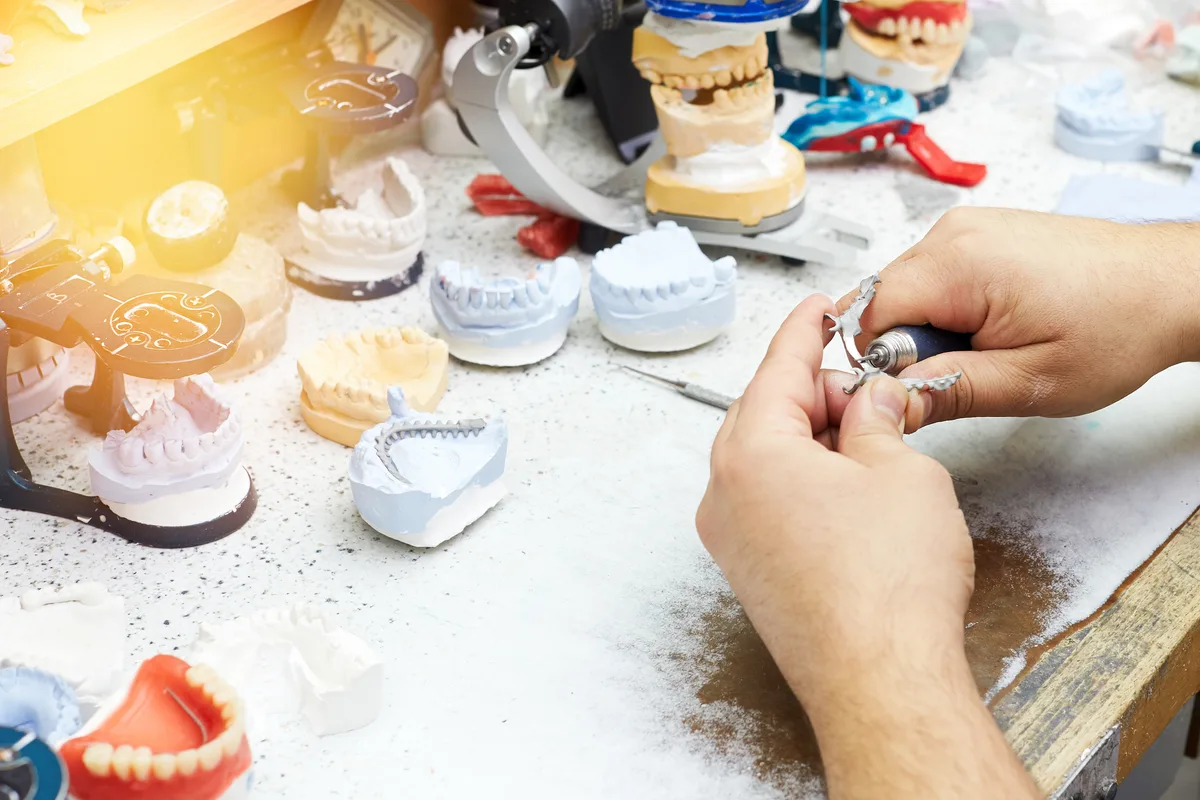
Zero-rated, not exempt — the distinction that pays for your mill
Under the Excise Tax Act, a dental prosthesis supplied on the written order of a dentist or denturist for a named patient is a zero-rated medical device: the lab charges no GST/HST on that invoice line, and unlike an exempt supply, it still recovers full input tax credits on the materials, equipment and overhead behind it. That is the single most consequential HST fact in this business. Confuse zero-rated with exempt and a lab either charges tax it should not, or quietly gives up input tax credits it was entitled to claim on every alloy purchase and every mill lease payment.
What is actually zero-rated, and what is not
Zero-rating turns on the paperwork as much as the product: a written order naming the patient is what earns it, so we confirm classification line by line rather than assume an entire invoice is zero-rated because most of it usually is. See the difference between zero-rated and exempt supplies for the general mechanics behind the rule.
| Supply | GST/HST treatment | Note |
|---|---|---|
| Crown, bridge or denture on a dentist’s written order for a named patient | Zero-rated | Full input tax credits still apply on materials and equipment |
| Repair or reline made to a dentist’s order | Zero-rated | Same paperwork requirement as a new appliance |
| Mouthguard or whitening tray sold direct to a consumer, no dentist order | Taxable | Charge HST; there is no prescription behind the sale |
| Design services or equipment sold to another lab or dentist | Taxable | Not a dental prosthesis supplied to a patient |
Inventory costing feeds the T2 as much as the GST34
Alloy, zirconia and PMMA disks bought at different prices through the year need a consistent costing method — first-in-first-out or weighted average, applied the same way every period — so cost of goods sold on the T2 reflects what the lab actually spent, not whichever invoice happened to be handy. The standard-cost variances from our bookkeeping work for dental labs roll straight into that inventory number at year-end, which is why costing has to be consistent month to month rather than corrected once a year at the accountant’s desk. One niche point worth knowing: SR&ED rarely applies to routine case production, since fabricating a crown to a known workflow is not systematic experimentation — the credit is realistic only for a lab genuinely developing a new material system or workflow, and we say so plainly rather than build a claim that will not hold up.
Registering, and why most labs end up filing for refunds
A lab crosses the $30,000 small-supplier threshold on the combined value of its zero-rated and taxable sales, and registering is what unlocks the input tax credits that make zero-rating worth having in the first place — a lab that stays unregistered because it charges no tax anyway is leaving real money on the table. Because output tax is usually zero while input tax credits keep accumulating on alloy, disks and equipment, most labs sit in a chronic refund position rather than a remittance one, and CRA verification of a refund claim will look for the dentist’s prescription or work order behind each zero-rated line, so that paperwork belongs in the file the month the case ships, not the month of an audit.
T2 and CCA on mills, ovens and printers
A standard business corporation pays the small business rate on its first $500,000 of active income, same as any Canadian-controlled private corporation. Lab equipment — CAD/CAM mills, 3D printers, sintering furnaces — generally falls into Class 8 at 20% declining balance, with the scanners and computers running the design software in Class 50 at 55%. As at the time of writing, a CCPC can immediately expense a portion of eligible equipment each year under current federal rules, which can matter a great deal the year a lab replaces its mill — but only if the equipment is delivered and available for use before the corporation’s year-end, so timing the order matters as much as the price. See the corporate tax rate for a small business in Ontario for how the small business rate itself is calculated. Import duty on US-made materials and equipment, and the treatment of exports to US dentists, are covered on our cross-border tax guide for dental labs; the whole domestic engine runs through our tax services on fixed fees.
Common questions.
Do we charge HST on a crown or denture?
Not if it is made on a dentist’s or denturist’s written order for a named patient — that supply is zero-rated, so you charge no tax yet still recover full input tax credits on the materials and equipment behind it.
If most of our sales are zero-rated, do we still register for HST?
Yes, once taxable and zero-rated sales together pass $30,000. Registering is what lets you recover the input tax credits that make zero-rating worth having, and most labs end up filing for refunds rather than remittances.
What CCA class does a milling machine fall into?
General lab equipment — mills, printers, sintering furnaces — is typically Class 8 at 20% declining balance, though current federal rules let a CCPC immediately expense a portion of eligible equipment each year. We check the class and the available-for-use date on every purchase.
Related reading
Tax filed the way the appliance is actually taxed.
Book a consultation and get a plain answer on exactly what applies to you.