
Who We Help · Banquet Halls · Cross-Border Tax
Banquet hall cross-border tax: what US suppliers really cost at the border
A banquet hall has one of the shortest cross-border files in hospitality, and it splits cleanly in two: the bar cannot be an import line at all because Ontario licensees buy alcohol through LCBO channels, while everything else — linens, tableware, furniture, AV gear — crosses the border directly and pays 5 percent GST you can recover only if the entry is done right. That is the whole file, and we would rather tell you that than sell you treaty work you do not need.
By the AnalytIQ Accounting team · Last reviewed: August 12, 2026
The bar is not an import line
Ontario liquor sales licensees purchase alcohol through authorized LCBO channels, so a hall cannot simply order a pallet of Kentucky bourbon from a US distributor for the bar. The cross-border cost of American wine and spirits is real, but it reaches you already embedded in the LCBO invoice — federal excise, markup and any tariff-era pricing included — and a specialty pour a client insists on still travels through LCBO private-ordering channels rather than your own customs entry. That means no withholding file, no broker, no duty calculation on the beverage side: the discipline is purely domestic, matching bar purchases to event billings and keeping HST on the catering output clean.
The imports you actually make
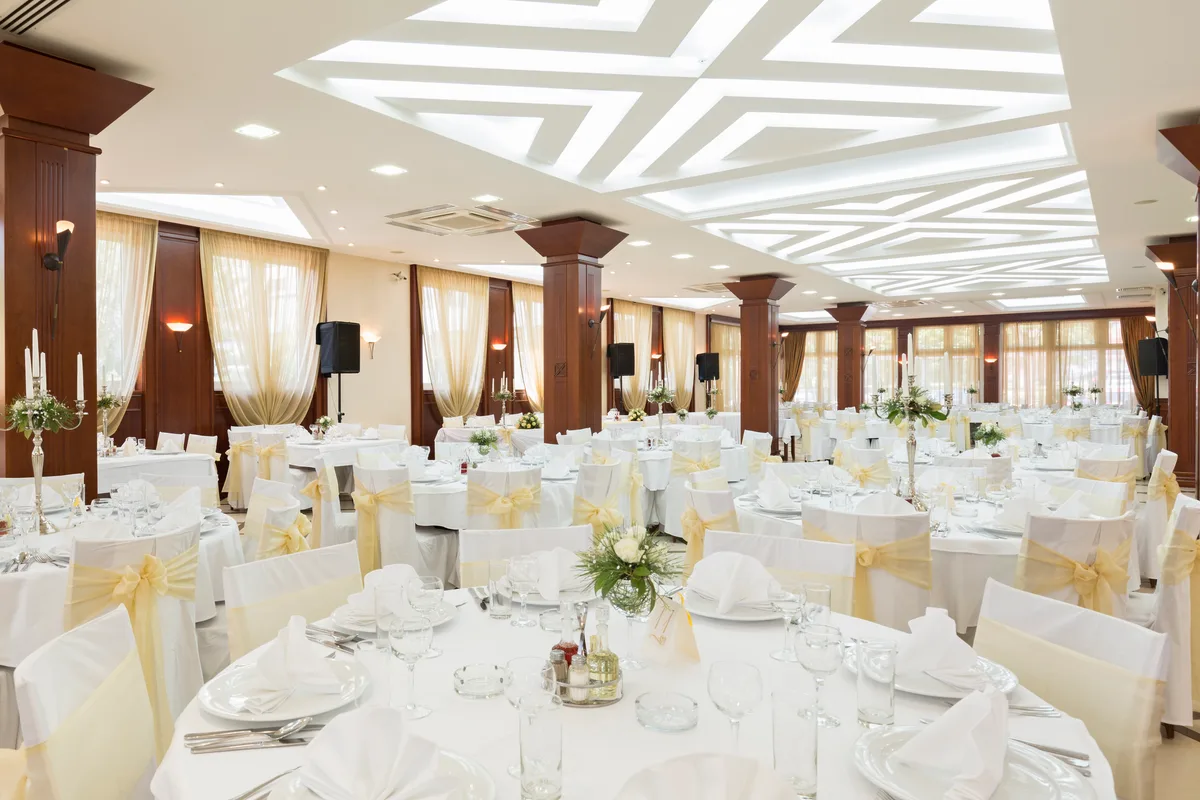
The goods a hall genuinely brings across the border are the room itself: linens, chargers and dinnerware, Chiavari chairs, staging, dance floors, and AV and lighting equipment bought from US suppliers. Each shipment pays 5 percent GST on the converted value at the border, and a registered hall recovers every dollar of it as an input tax credit — but only when the customs entry names your business as importer of record instead of vanishing into a courier account.
| What crosses | GST at the border | Duty picture |
|---|---|---|
| Linens, dinnerware, decor | 5 percent, recoverable as an ITC | Much of it is Asian-made sold from US warehouses — origin, not the ship-from address, sets the duty |
| Chairs, tables, staging | 5 percent, recoverable as an ITC | Duty-free under CUSMA only when genuinely North American-made |
| AV, lighting, kitchen equipment | 5 percent, recoverable as an ITC | Capitalize at full landed Canadian-dollar cost — price, freight, brokerage, duty — as the CCA base |
| US wine and spirits | Not your entry — LCBO channels only | Excise and markup arrive inside the LCBO price |
Two habits capture most of the value. Route anything substantial through a broker with your hall named as importer so the GST comes back, and book furniture and equipment at landed cost in Canadian dollars, because that number drives capital cost allowance for the next decade.
One flag for US-person owners
GTA banquet halls are overwhelmingly family businesses, and when one owner holds US citizenship or a green card, the hall's Canadian filings do not change — but that owner files a US return on worldwide income, likely owes Form 5471 on the hall corporation, and reports Canadian accounts on an FBAR. It is an ownership question, not a business one, and we handle it as part of the family's file rather than the venue's.
The honest close: the money is in the room, not the border
A hall with no US revenue has no US filings, no treaty positions and no withholding calendar — the import hygiene above is the entire cross-border file. The dollars that decide whether the venue thrives are domestic: deposit handling, cash controls on bar and gratuities, and HST on catering, all covered in our banquet hall bookkeeping. When a genuine cross-border question does arrive — a US-person owner, an equipment dispute, an expansion idea — the full practice is at cross-border tax services. Boutique firm, fixed fees quoted after a discovery call.
Common questions.
Can our hall import US wine or bourbon directly for the bar?
No. Ontario liquor licensees buy through authorized LCBO channels, and even specialty products a client requests travel through LCBO private ordering. The border cost reaches you inside the LCBO price rather than through your own customs entry.
We bought 300 Chiavari chairs from a US supplier. Is the border GST lost?
Not if the customs entry names your hall as importer of record — then the 5 percent comes back as an input tax credit. Cleared under the courier or seller account, it quietly becomes an unrecovered cost, which on a large furniture order is real money.
Does buying from a US company mean the goods enter duty-free under CUSMA?
Only if the goods actually originate in North America. Much of the event-supply catalogue is made in Asia and merely warehoused in the US, and duty follows where the goods were made, not the address on the shipping label.
Related reading
Real border math for your venue.
Book a consultation and get a plain answer on exactly what applies to you.